Story
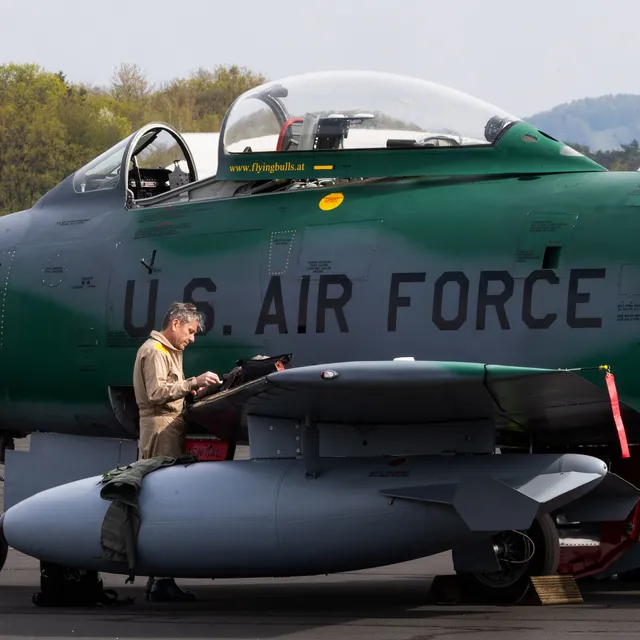
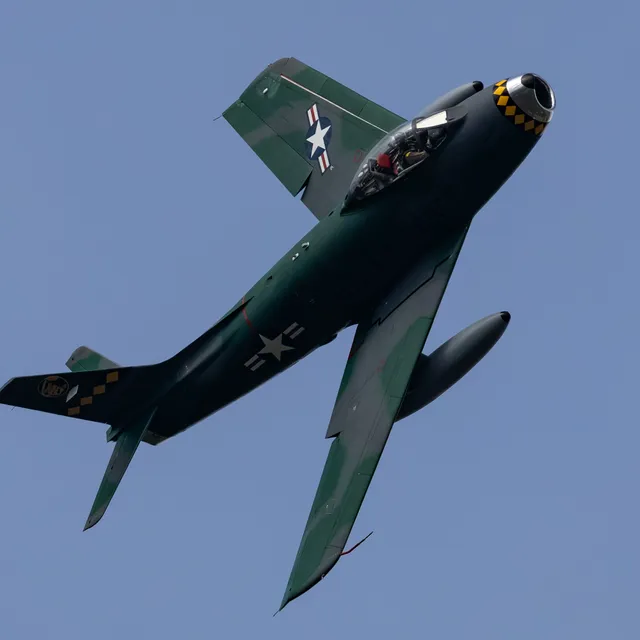
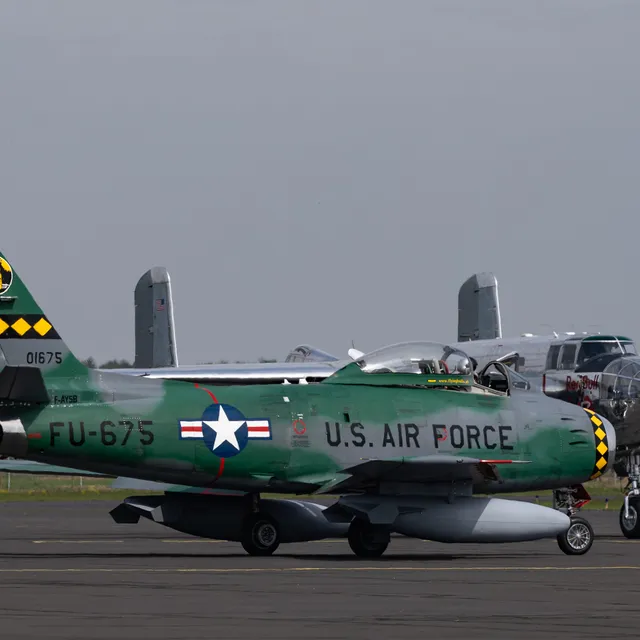
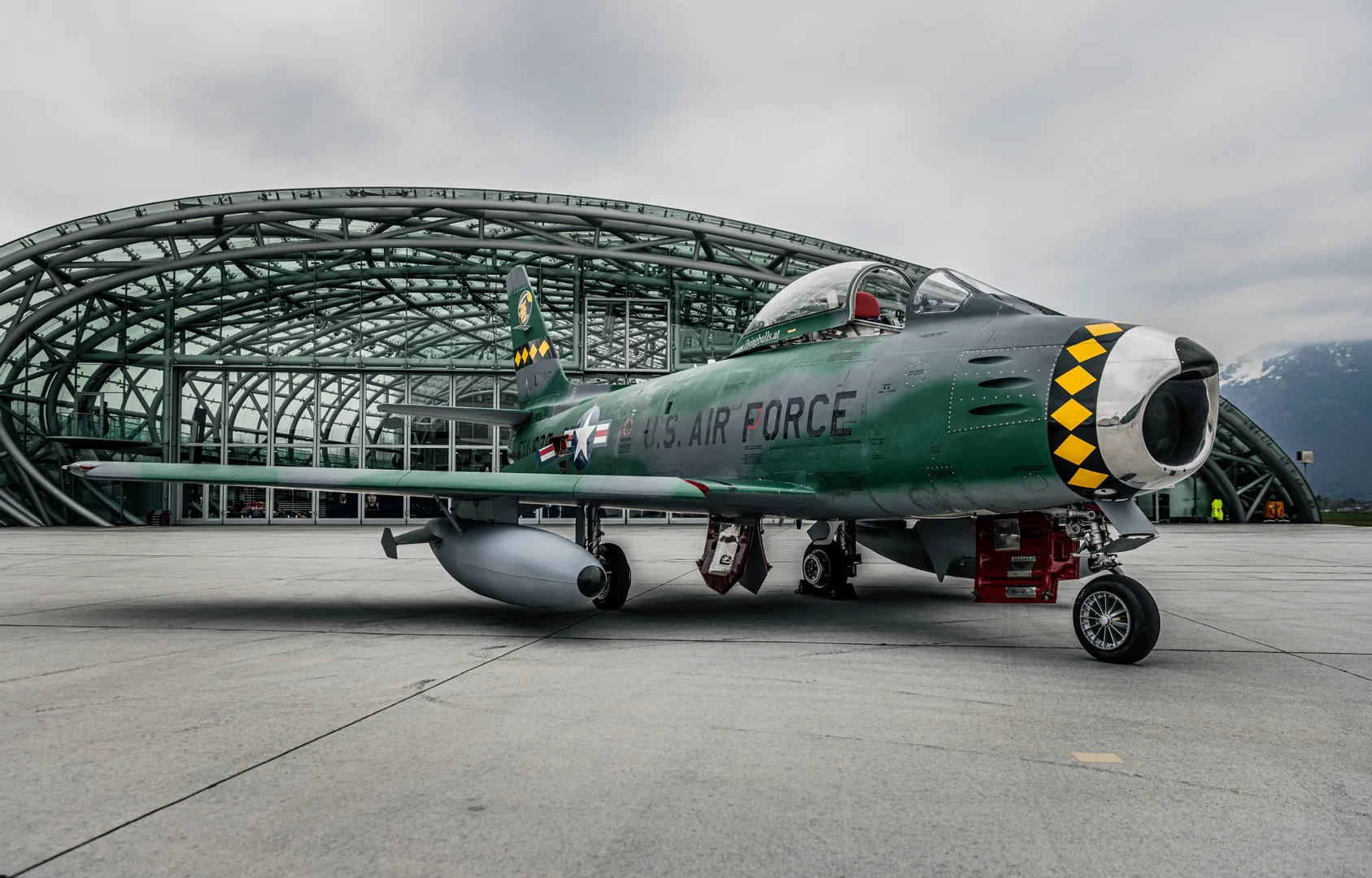
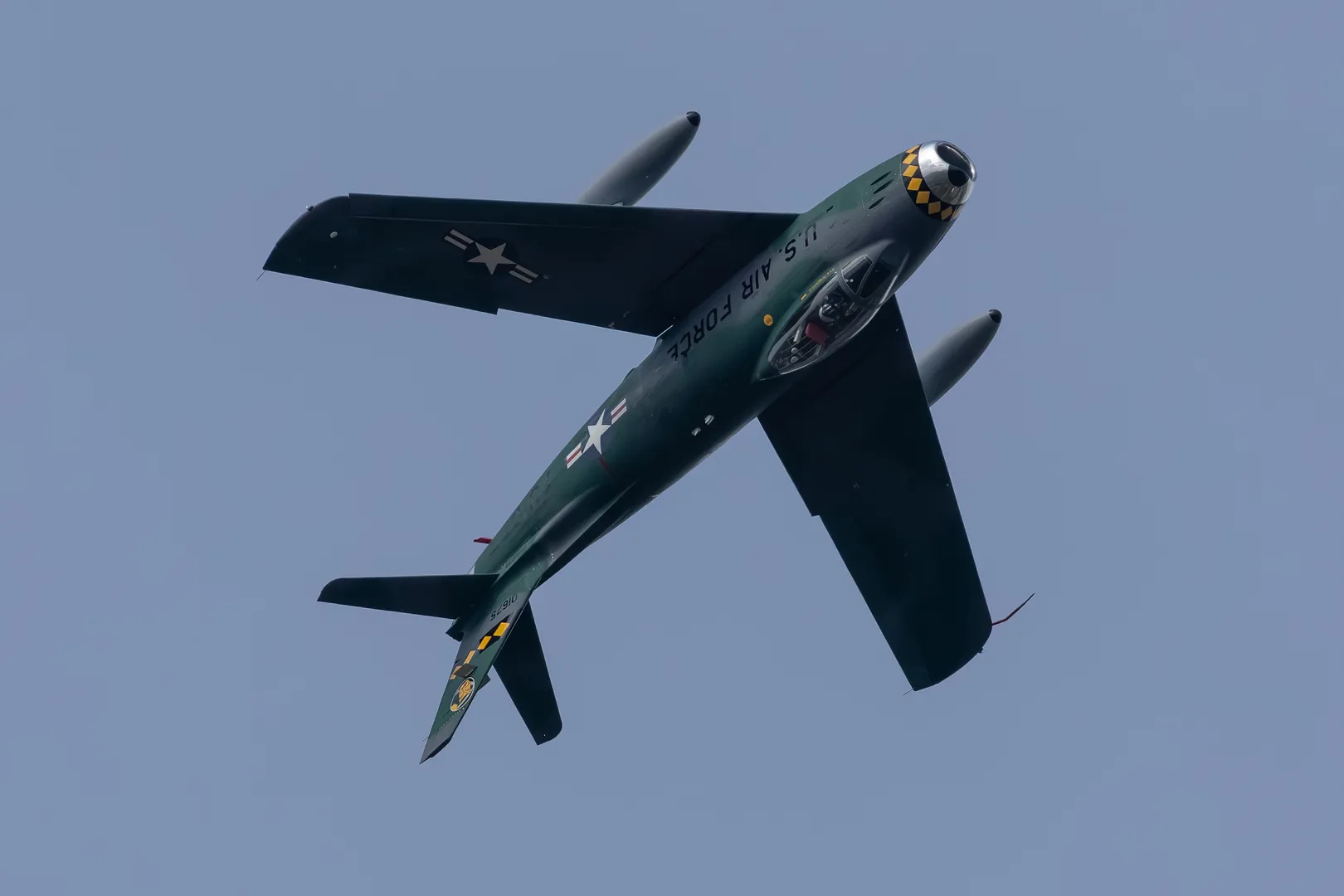
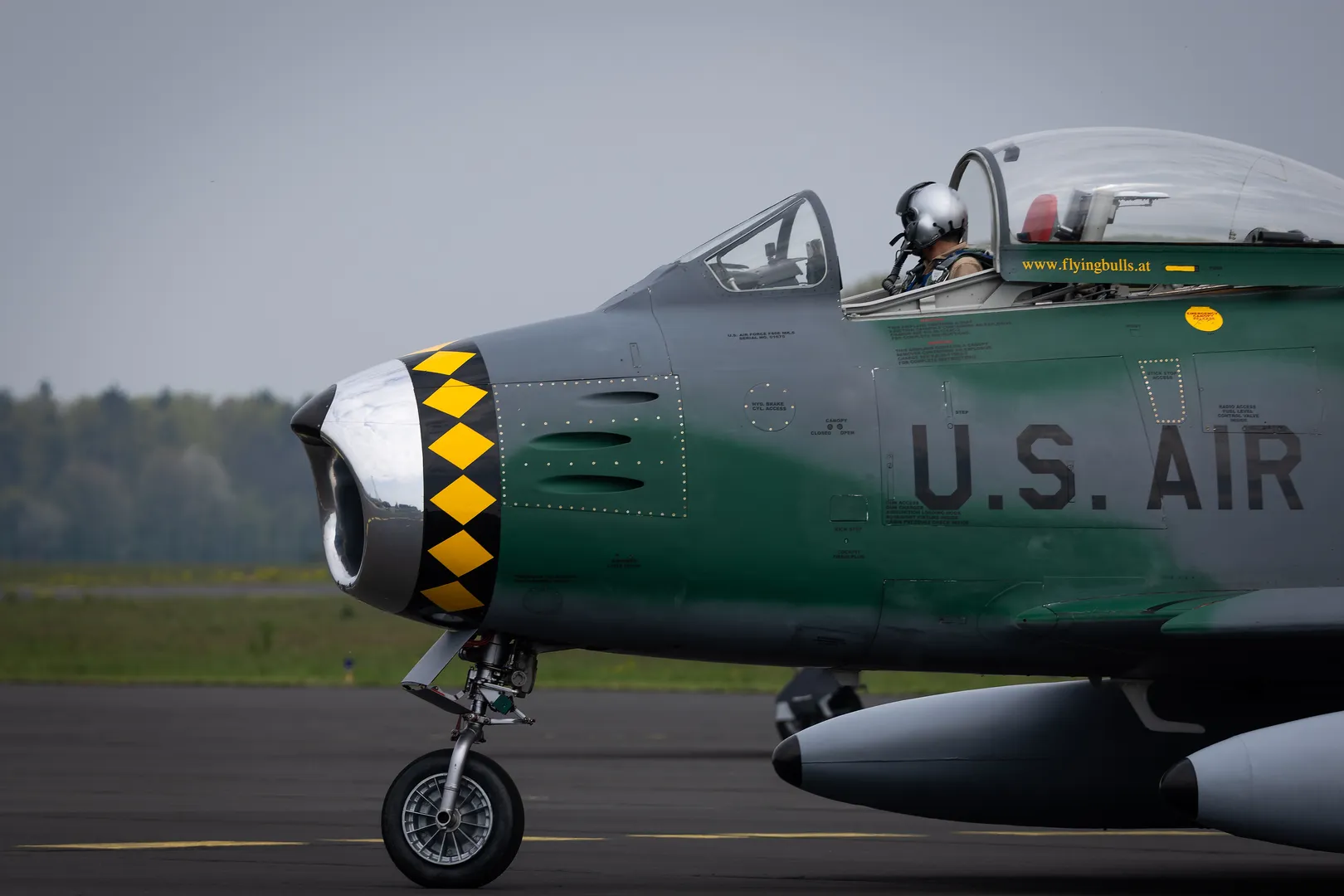
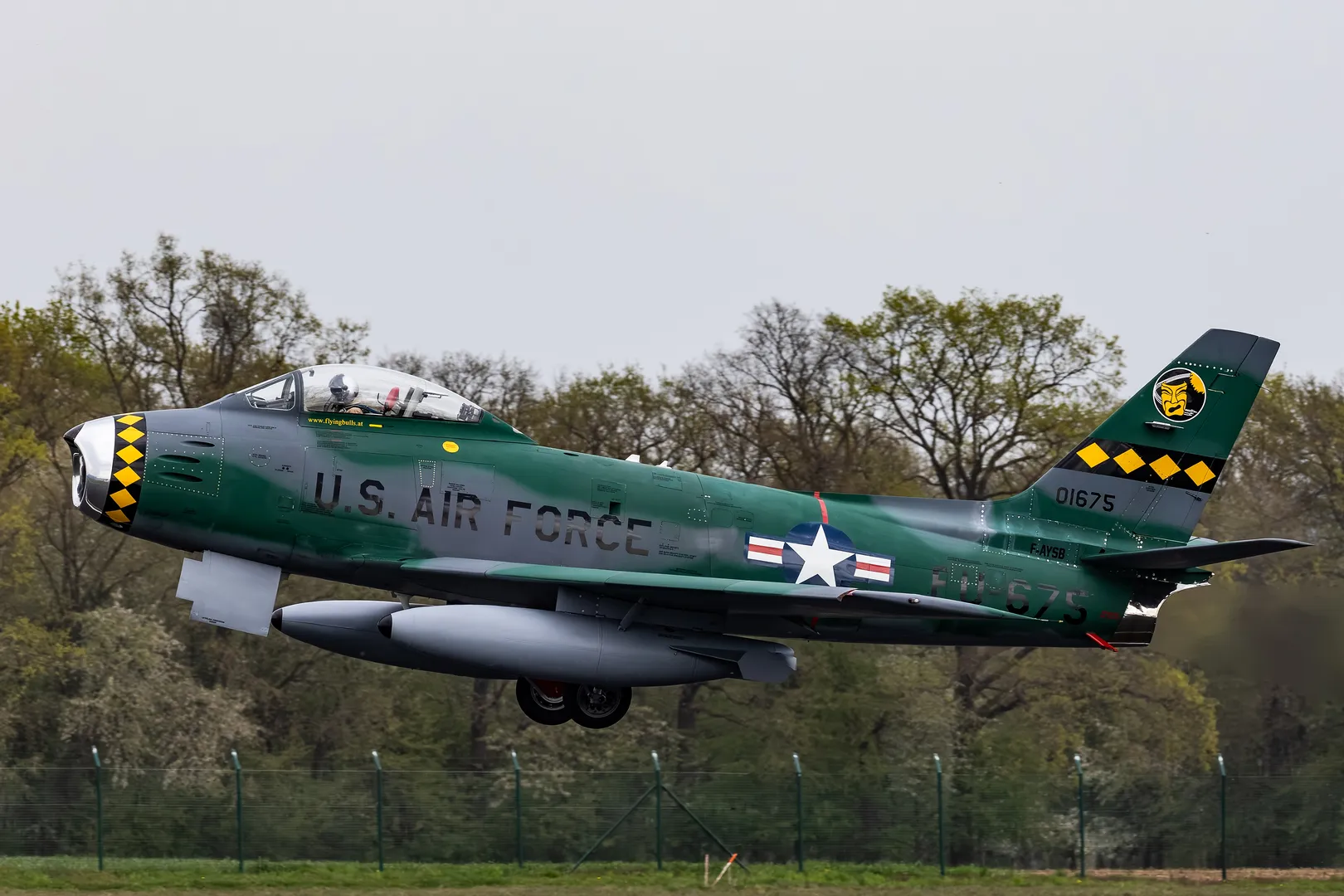
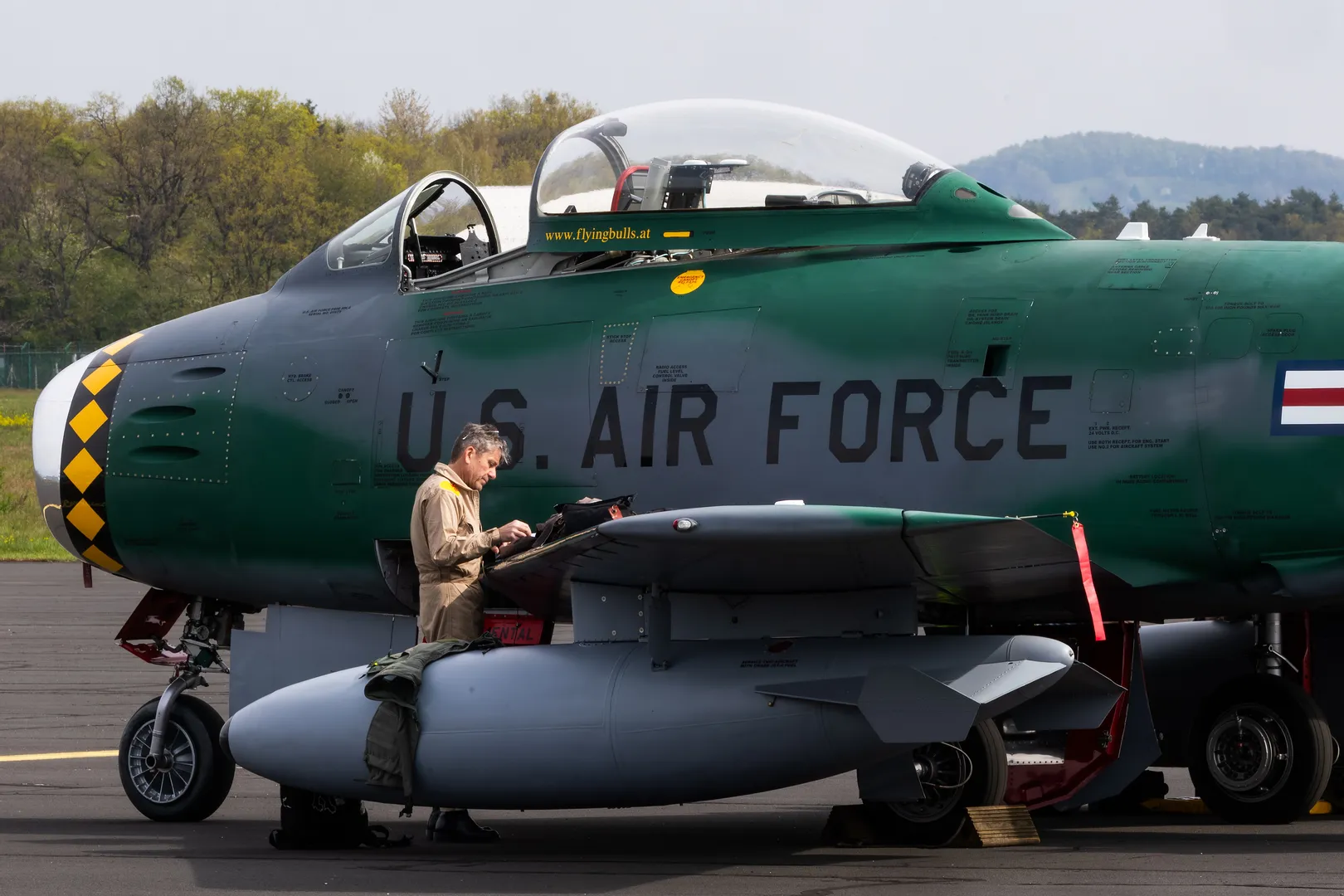
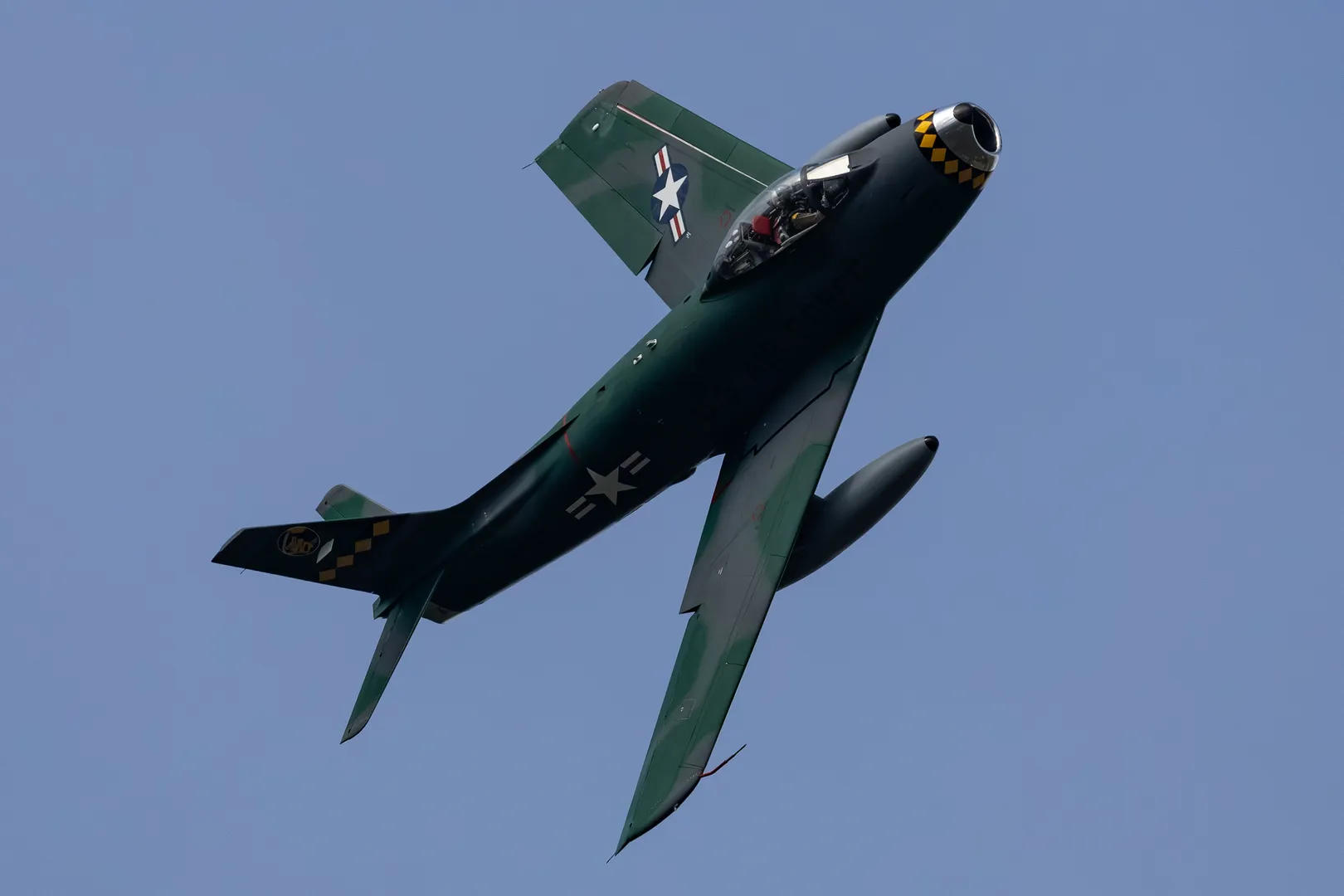
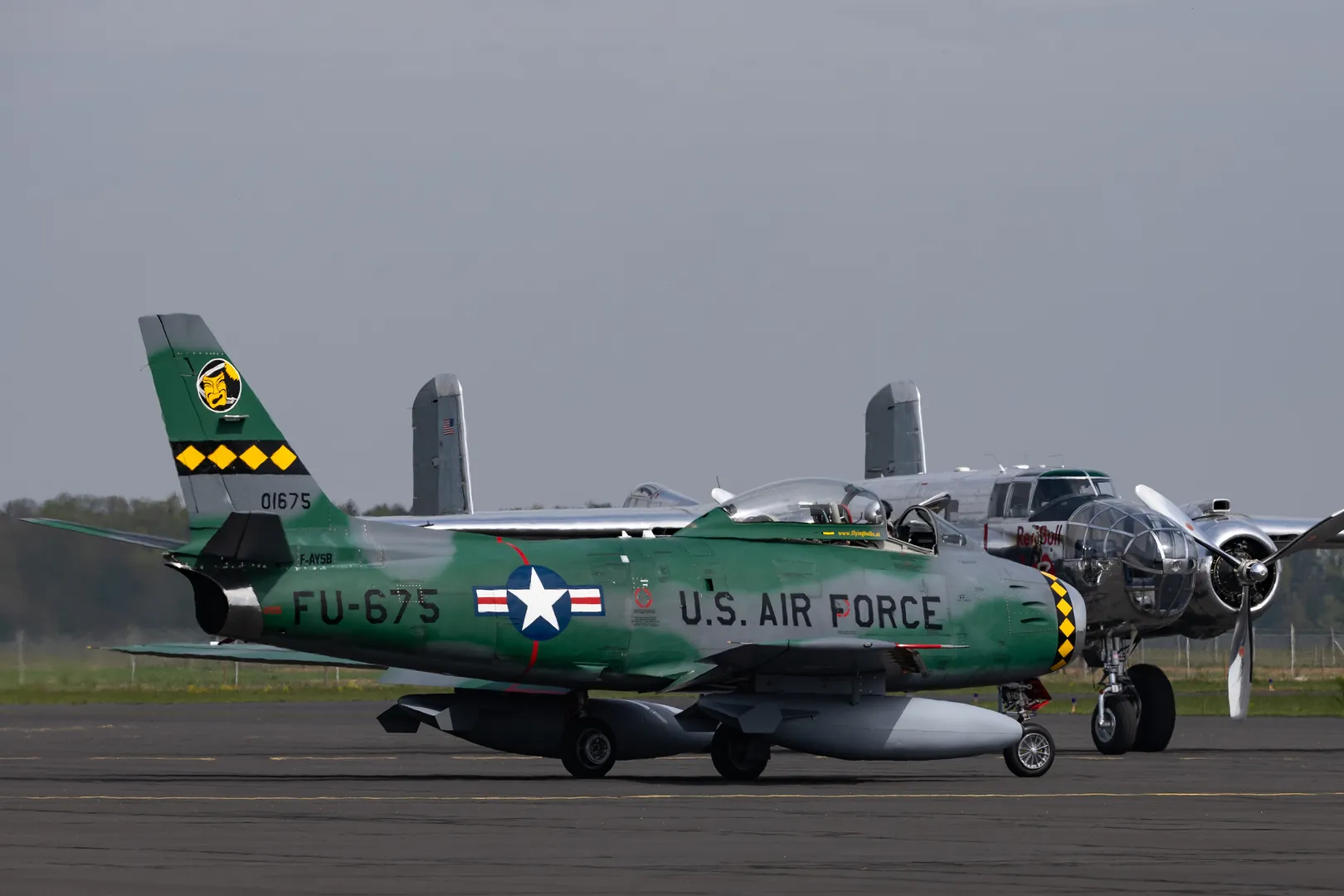
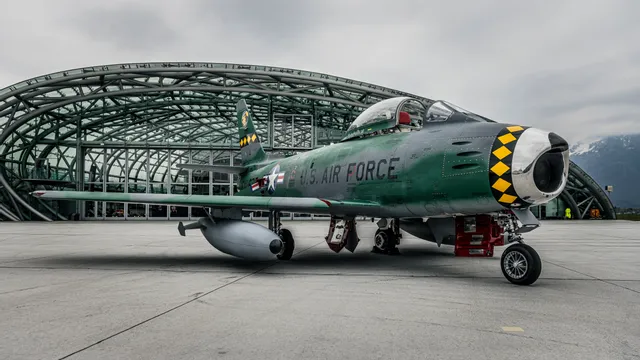
The Canadair CL-13B Sabre Mk.6 is the final and most powerful variant of the most prolific jet fighter the Western world has ever produced. Nearly 10,000 F-86 Sabres were built for 33 countries – more than twice the production total of the modern F-16. And yet today, roughly twelve are airworthy worldwide. This is the only one flying in Europe.
Taking a cue from Mark Twain, I would dare to say, “It seems very difficult, if not impossible – which is why we’re going to do it.” And as Antoine de Saint-Exupéry said, “Make your life a dream, and your dream a reality.”
The story of the Sabre starts at North American Aviation, the same factory responsible for the T-6 trainer and the P-51 Mustang. When their engineers designed a jet fighter in the late 1940s, they applied exactly the same philosophy: build a pure air combat machine. Big ailerons, a large wing, low stall speed, exceptional roll rate. No compromises in the direction of bombing missions or multi-role versatility. Just a fighter, designed to fight.
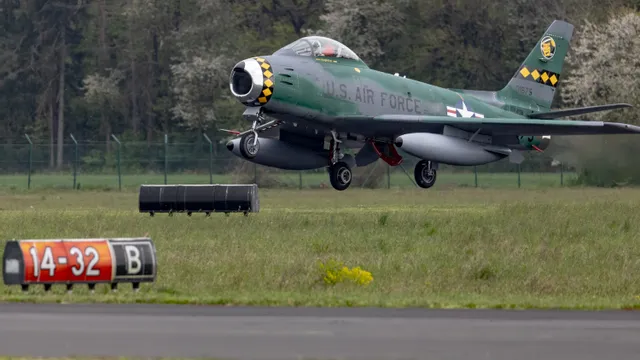
The Canadair engineers had a simple ambition: take the battle-proven Sabre airframe and install the most powerful engine available. The result was the Avro Canada Orenda 14 – a twostage turbojet developed entirely in Canada, producing 7,275 lbs of thrust, 50% more powerful than the engine in the first American F-86s. Combined with the refined "6-3" wing with leading edge slats for exceptional low-speed handling, the CL-13B Sabre Mk.6 became the aircraft every NATO pilot wanted to fly. Climb to 10,000 metres in about five minutes. Top speed of 710 mph. Superior to every other fighter in the NATO inventory of its day – and with more lowaltitude performance than many training jet fighters flying today. As legendary American display pilot Bob Hoover once put it when asked about his favourite jet: “The F-86 Sabre. Why? Because it flies like a Spitfire.”
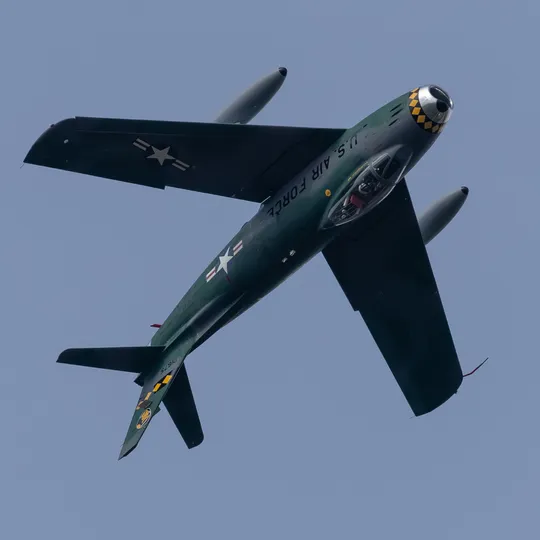
The Flying Bulls’ Sabre left the Canadair production line in 1958 – one of the last ever built – and was delivered to the Luftwaffe, where it served with Waffenschule 10, the Sabre conversion and training unit at Oldenburg in northern Germany. Its final chapter in German service was the most remarkable: assigned to the military flight test centre at Manching in Bavaria, it flew as a chase plane for the experimental VJ-101 – West Germany's attempt to develop a supersonic vertical take-off jet fighter. A Sabre keeping pace with the future, all the way to the end of its military life.
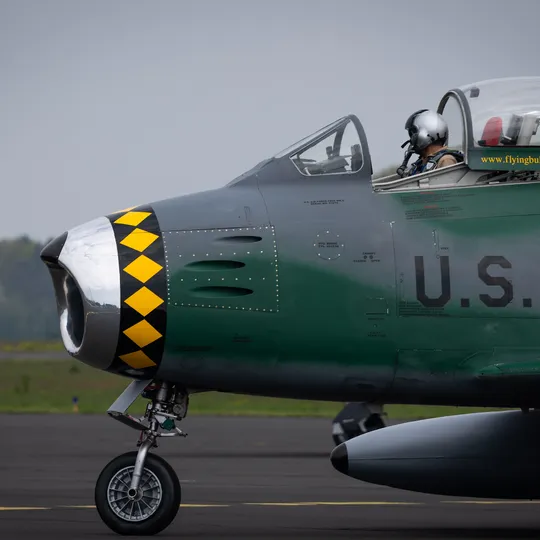
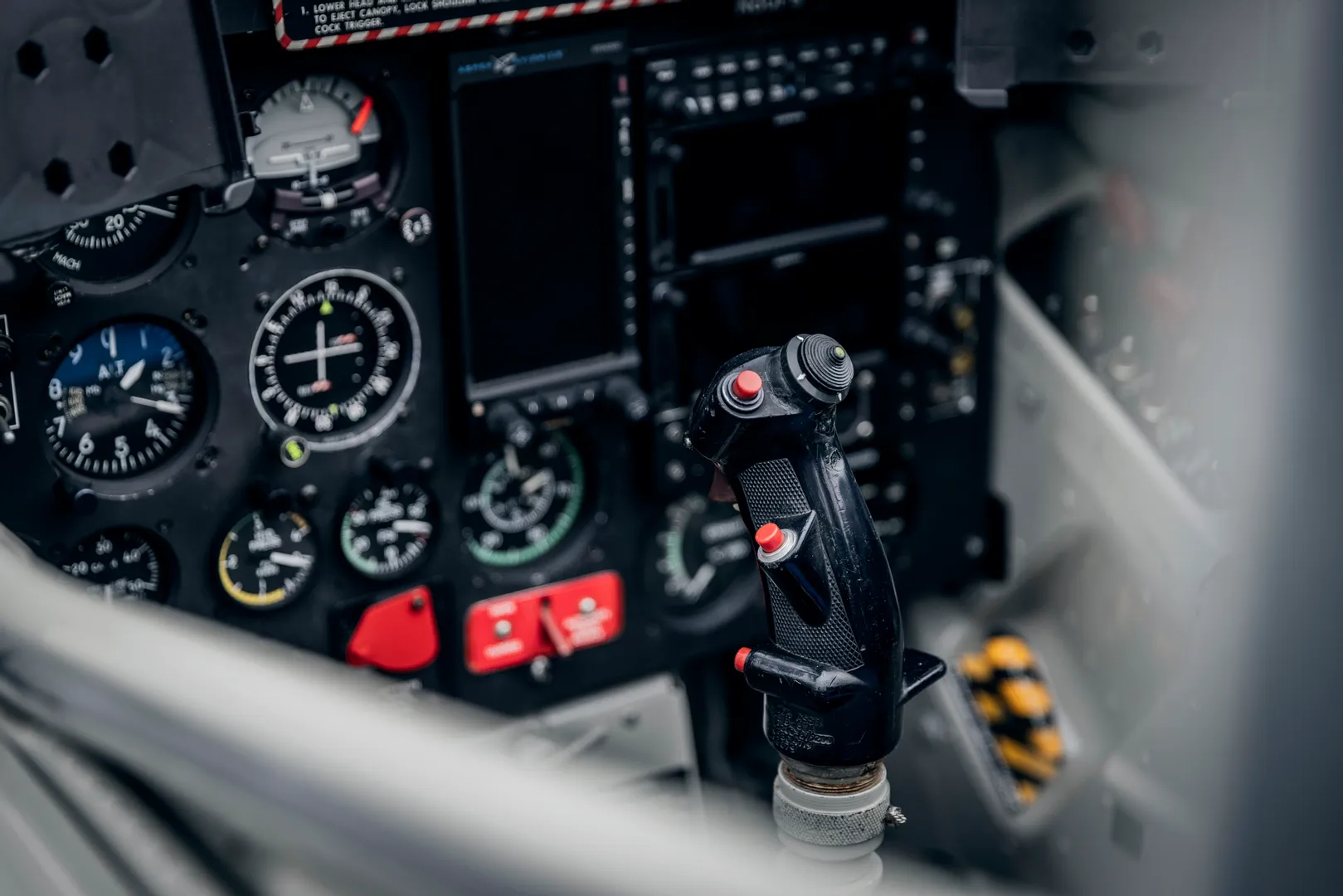
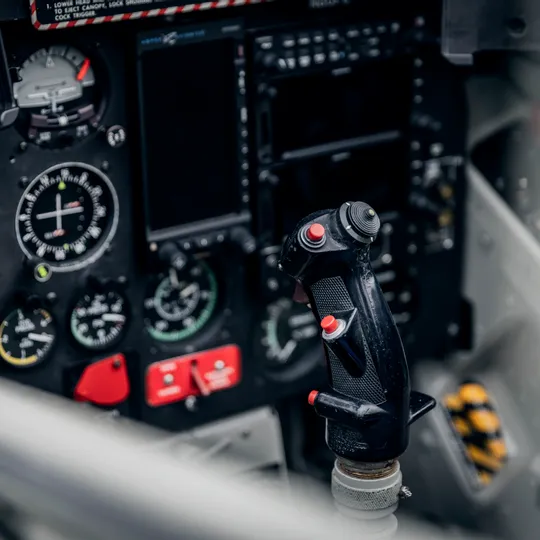
Nearly 10,000 Sabres were built. So why are fewer than a dozen flying today? For decades, collector interest focused almost exclusively on World War II aircraft. Korean War jets attracted little attention, and most were scrapped, repurposed as drone targets, or simply left to deteriorate. The Sabre slipped through the net. But today things are changing, and jet aircraft are starting to become popular – especially the F-86, which is an icon. Two new F-86s are expected to take to the skies again in the coming years, following thousands of hours of restoration work. What makes the Mk.6 a genuinely sustainable long-term proposition is its complete absence of electronics. No circuit boards. No obsolete components impossible to source. With three containers of spare parts and an Orenda 14 engine that can still be fully overhauled, the aircraft is built to keep flying – for another 50 to 60 years.
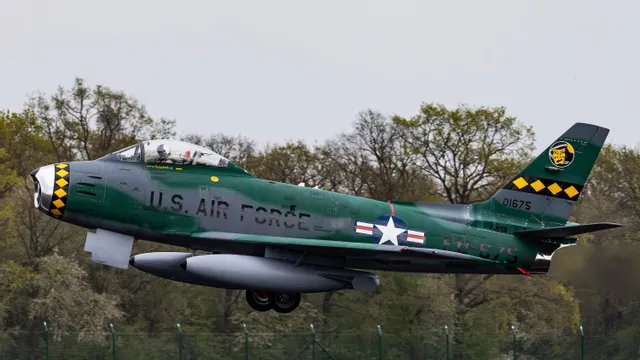
Technical Data
height
width
length